Why Everyone is Buying the Go Cordless Hand Blender (Full Review)
I've been using the Go Cordless Hand Blender for about six months now, and after that time it felt right to sit down and give a thorough account of what worked, what didn't, and why I see so many people choosing this model. I bought it because I wanted the freedom of a cordless stick blender for quick soups, smoothies, and a little weekend whipping without being tethered to the counter. What I found was a product that liberated my workflow in the kitchen in many small but meaningful ways — and also one that has a few annoyances you won't see in marketing pictures.
Why I picked a cordless stick blender
Before getting the Go Cordless, I was tired of dragging out a heavy blender for small jobs, and I was frustrated by cords that shorted my reach when blending in tall pots. I wanted something lightweight, fast to grab, and that wouldn't require searching for an outlet under the cabinet. The promise of a rechargeable stick that could handle daily tasks sounded ideal — and the Go Cordless fit the bill on paper.
First impressions and unboxing
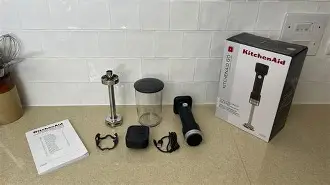
Out of the box, the Go Cordless Hand Blender felt solid without being heavy. The unit I bought came with a slim charging puck and a short USB-C cable, a whisk attachment, a mixing cup (not very large), and an extra detachable blending shaft. The manual was concise, and the first thing I noticed was the ergonomic grip — it sits well in my hand and the controls are reachable with my thumb, which makes one-handed operation easy when I'm stabilizing a pot with the other hand.
Build quality and design
The body is mostly matte plastic with a soft-touch finish on the handle; it doesn't feel cheap. The blending shaft is stainless steel and detaches with a twist, which is convenient. One small gripe from day one was that the release collar is a little stiff — I had to use both hands the first few times. I also wish the shaft had a small splash guard built into it; when I blended very hot soups in a deep pot I noticed a bit more steam and splatter than I expected.
Real-world performance: what I tested
Over the months I've used the Go Cordless for:
- Pureeing roasted tomato soup directly in the pot
- Making single-serve smoothies with frozen fruit
- Emulsifying salad dressing and mayo
- Whipping cream with the whisk attachment
- Blending baby food (small batches)
For soups and smoothies, the Go Cordless was excellent. The blades are sharp and the shaft is wide enough to move a good volume of food per stroke, so soups became silky in under a minute of pulsing. When I used frozen berries and a splash of almond milk, it handled them well at the high setting — I didn't encounter the big chunks you sometimes get with less powerful stick blenders.
Emulsifying vinaigrettes and mayonnaise was where I was pleasantly surprised. Because the blender is cordless and maneuverable, I found it easy to create a stable emulsion by moving the shaft slowly from top to bottom. The whisk attachment worked fine for lightly whipped cream or beating two eggs, though if I started with large quantities (more than 300–400 ml) the whisk struggled a bit and took longer than a stand mixer.
Speed settings and control
The unit I own has three speed steps plus a turbo button. In my experience, the three-step range covers most needs: low for delicate emulsions, medium for soups and topping blends, and high for frozen fruit. The turbo gives a boost for stubborn chunks, but it draws noticeably more battery. I liked having the tactile click at each speed setting because it helped me keep consistent results without looking at the device.
Battery life and charging (the cordless reality)
Battery life is the feature that makes or breaks a cordless kitchen gadget. I tested the Go Cordless by running these real-world cycles:
- Ten 30-second smoothie blends: about 22 minutes total active run time — left roughly 20% battery
- Four minutes continuous pureeing of a large pot of soup: used ~35–40% battery
- Whisking cream (4 small batches, ~45 seconds each): drained around 25% battery
From these tests, I estimate practical runtime at roughly 40–50 minutes of intermittent use on a full charge when mixing across speeds. That was enough for me as a weekday cook and occasional batch-maker. Charging from empty to full took about 2.5 hours using the included USB-C puck and cable; the puck makes it convenient to set on a counter but the cable could be longer. I appreciated that I could charge from a laptop or a wall USB-C adapter when traveling.
One caveat: battery performance degrades slightly if you often use the turbo setting. On high-torque mixes (frozen fruit in large quantities) I noticed the battery meter would drop faster and the motor felt warmer — not alarming, but worth noting if you frequently push the device hard.
Looking for the best Electronics deals on Amazon?
View Offers →Cleaning and maintenance
I liked how easy the Go Cordless was to clean. The detachable shaft and whisk are quick to rinse under the tap, and I occasionally run them in the top rack of the dishwasher. The manual says the shaft is dishwasher-safe; the whisk and plastic cup are fine too, though the soft-touch handle should never be submerged. After six months, I don't see rust or degradation on the stainless parts, and the release mechanism still snaps firmly into place — though, again, it's a little stiff compared to some others.
One maintenance note: food can get trapped where the shaft meets the body if you don't detach and rinse immediately after use. I learned to give it a quick twist and run water through the connection after blending soups. That keeps it hygienic and saves me from picking dried bits out later.
Noise, heat, and durability
Noise level is reasonable for a handheld blender — louder than my immersion blender with a bigger motor, but not so loud that I couldn't talk while making a smoothie. The motor runs a touch warmer after prolonged use (several minutes continuous), which is normal; I avoid long continuous runs by pulsing and giving it short breaks.
Durability-wise, after six months of regular use there are only minor signs of wear: tiny scuffs on the shaft and a faint sheen on the handle where my wrist rests. No cracks or performance drops. I would call it sturdy but not indestructible. If you're rough with attachments or use it daily for heavy-duty mixing, expect normal wear over a few years.
What I appreciated (and what bothered me)
- Appreciated: The cordless freedom — blending soups in the pot without stretching a cord; comfortable grip for one-handed use; sharp blades and effective pureeing; USB-C charging; compact storage footprint.
- Bothered me: Stiff attachment collar that takes two hands sometimes; slightly splash-prone with very hot liquids; short charging cable; the mixing cup is small — I had to use my own larger jar for smoothies; turbo drains the battery quickly.
Pros & Cons
- Pros
- Truly cordless convenience — much easier to use in different places in the kitchen
- Sharp, efficient blades that puree quickly
- Three speeds plus turbo for flexible control
- Lightweight and comfortable to hold for extended use
- Easy to clean; detachable shaft is dishwasher-safe
- USB-C charging adds travel flexibility
- Cons
- Attachment release is a bit stiff at first
- No integrated splash guard — splatter with very hot liquids
- Short charging cable included; puck takes up counter space
- Whisk struggles with larger volumes
- Turbo mode noticeably shortens battery life
How the Go Cordless stacks up (comparison)
To give a clearer picture, here’s a simple comparison table against a generic corded immersion blender and a rival cordless stick blender I tested a while back (I’ll call it the BatteryPlus Cordless). This is based on my hands-on time with each device.
| Feature | Go Cordless Hand Blender (my unit) | BatteryPlus Cordless (rival) | Corded Immersion (traditional) |
|---|---|---|---|
| Power / Real-world torque | Good — handles frozen fruit and soups well | Comparable — slightly less torque on high | Highest — consistent power for large batches |
| Battery life | ~40–50 minutes intermittent use | ~30–40 minutes | Unlimited (corded) |
| Charging | USB-C puck, ~2.5 hours | Proprietary dock, ~3 hours | Not applicable |
| Weight | Light — easy one-handed use | Similar weight | Often heavier with cord |
| Attachments | Shaft, whisk, small cup | Shaft, mini-chopper, whisk | Shaft, whisk (fewer cordless accessories) |
| Cleaning | Detachable shaft, dishwasher-safe | Detachable but docked parts tricky | Generally dishwasher-safe shafts |
| Noise | Moderate | Moderate to loud | Varies; often louder |
| Best for | Everyday soups, smoothies, small batches | Portable use, light jobs | Heavy-duty, continuous blending |
Buying guide: what to look for in a cordless hand blender
If you’re considering a cordless hand blender like the Go Cordless, here are the key factors I recommend checking before you buy. These are lessons I learned the hard way after a few months of use.
1. Realistic battery life
Look for advertised run time but also read reviews that test real tasks (smoothies, soups, whisking). I found that runtime on low or medium is much more meaningful than “X blends per charge” marketing claims.
2. Charging method and cable length
USB-C charging is convenient — it lets you charge from multiple sources. Check the included cable length; a short cable can be annoying if your outlet isn’t handy. A dock can look tidy but can also take more counter space.
3. Attachment ease and dishwasher safety
Make sure the shaft detaches easily and washability is practical. If you plan to use a whisk often, check that it’s robust enough for the volume you expect to whip.
4. Power and motor cooling
Pay attention to how the motor behaves under load: does it overheat, slow down, or make strained noises? If a product regularly struggles with frozen fruit or thick purees, you'll notice the frustration quickly.
Discover deals on Electronics — updated daily.
Shop Amazon →5. Comfort and ergonomics
Try to get a sense of grip shape and button placement. One-handed use is a major advantage; if the buttons are hard to reach or the blender is top-heavy, it defeats the purpose.
6. Splash control
If you blend hot liquids, a model with a well-designed shaft or splash guard matters. A little splatter can be manageable, but hot-soup splashes are a safety concern.
7. Accessories and storage
Consider whether the set includes a tall beaker (I found the included mixing cup too small), a whisk, and any chopping attachments. Also think about where you’ll store it — compact docks are nice but may add clutter.
Who should buy the Go Cordless?
In my experience, the Go Cordless is ideal if you:
- Want a quick, flexible tool for soups and single-serve smoothies
- Value cordless convenience and USB-C charging
- Prefer lightweight, one-handed operation for everyday cooking
It’s less ideal if you plan heavy daily use for very large batches or if you need an appliance that can run continuously for long periods without recharging. For that, a corded immersion blender or a full countertop blender remains better suited.
Final thoughts and conclusion
After six months of regular use, the Go Cordless Hand Blender has become the tool I reach for more often than I expected. The freedom to blend directly in pots, to walk across the kitchen island without a cord, and to quickly make a smoothie or baby food makes weekday cooking a bit smoother. I appreciated the solid blades, comfortable grip, and the practical battery life for typical household jobs.
That said, it’s not perfect. The stiff attachment collar and lack of a built-in splash guard are small but real irritants. Turbo eats battery fast, and the included mixing cup is smaller than I’d like. If those are dealbreakers for you, a corded model might be preferable. For my needs, though, the trade-offs were worth it: I gained convenience and speed, and I found myself using the blender more simply because it was easy to reach and ready to go.
Overall, in my experience the Go Cordless Hand Blender is a thoughtful, well-balanced cordless stick blender that makes everyday blending tasks easier. It earned a permanent spot in my kitchen because it saved me time and reduced friction during routine cooking — and that’s what I value most in a small appliance.