Which is Better Value? Om System Om 5 Ii vs Fujifilm X T30 Iii Compared
For enthusiasts and travelers who want high-quality photography without the weight of a professional full-frame kit, the mid-range mirrorless market has never been more competitive. Two cameras currently dominate the conversation: the Om System Om 5 Ii and the Fujifilm X T30 Iii. These cameras represent the pinnacle of their respective sensor formats—Micro Four Thirds and APS-C—offering distinct philosophies on what a portable camera should be. While both aim to balance compact dimensions with powerful features, they cater to different types of creators. Choosing between them requires a deep look at imaging performance, physical durability, and the ecosystem of lenses that supports them.
The Om System Om 5 Ii is built on a legacy of ruggedness and computed photography. It is designed for those who venture into harsh environments and need a tool that can survive rain, dust, and freezing temperatures. Conversely, the Fujifilm X T30 Iii leans into the cult-favorite "X-series" aesthetics, emphasizing physical dials, legendary color science, and a slightly larger sensor that provides a different depth-of-field characteristic. In this comparison, we evaluate which of these two provides the better overall value based on features, performance, and long-term utility.
Detailed Product Analysis: Om System Om 5 Ii
The Om System Om 5 Ii is a testament to the idea that big things come in small packages. As the successor to the original Om 5, this second iteration refines the hardware while doubling down on the software-driven features that Micro Four Thirds users have come to love. The heart of the camera is its 20.4-megapixel Live MOS sensor. While some might argue that 20 megapixels is modest by modern standards, the Om 5 Ii makes up for it with incredible speed and computational efficiency.
The standout feature of the Om System philosophy is computational photography. Because the sensor is smaller, Om System uses its TruePic processor to perform tasks that would usually require external hardware or software. For example, the Live ND feature simulates long exposure photography—like smoothing waterfall silk or blurring clouds—without the need for physical glass filters. For the value-conscious buyer, this translates to savings of hundreds of dollars in external filter kits. Furthermore, the Handheld High Res Shot mode allows users to capture 50-megapixel images by shifting the sensor and merging multiple frames, effectively mitigating the resolution gap when shooting stationary subjects.
Physical durability is where the Om 5 Ii arguably defeats almost every other camera in its price bracket. It features an IP53 weather-sealing rating, meaning it is officially certified to withstand heavy splashing and significant dust ingress. For hikers, landscape photographers, and outdoor adventurers, this peace of mind is a massive part of the "value" equation. The 5-axis In-Body Image Stabilization (IBIS) is also industry-leading, allowing users to shoot handheld exposures as long as one or two seconds with sharp results, often negating the need for a tripod.
Detailed Product Analysis: Fujifilm X T30 Iii
The Fujifilm X T30 Iii takes a different path, focusing on the tactile experience of photography and the "soul" of the image. It utilizes the 26.1-megapixel X-Trans CMOS 4 sensor, which is physically larger than the Micro Four Thirds sensor in the Om System. This larger surface area provides a native advantage in low-light performance and a shallower depth of field, which portrait photographers often find more aesthetically pleasing.
Fujifilm has cultivated a massive following through its Film Simulations. Instead of spending hours in post-processing software like Adobe Lightroom, X T30 Iii users can select from various profiles—such as Classic Chrome, Provia, or Acros—to give their JPEGs a finished, cinematic look straight out of the camera. The X T30 Iii is often called a "mini X-T5" because it inherits much of the autofocus and processing power of Fujifilm’s professional flagship but in a body that fits into a large coat pocket.
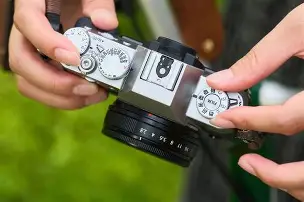
The ergonomics of the X T30 Iii are designed for those who want to feel connected to the exposure process. With dedicated dials for shutter speed, exposure compensation, and a drive mode selector, the camera encourages manual control. However, the X T30 Iii lacks the robust weather-sealing found in its rival. It is a camera built for urban exploration, travel, and social events rather than trekking through a rainforest. While it feels premium and well-constructed, it requires a bit more care in the field. The inclusion of a tilt-screen rather than the fully articulating screen of the Om 5 Ii is a polarizing choice, but it is often preferred by street photographers who want to shoot discretely from the hip.
Find top-rated Cameras & Photography products at great prices.
See Deals →Comparative Pros & Cons
Om System Om 5 Ii
- Pros: Exceptional IP53-rated weather sealing for extreme conditions; superior In-Body Image Stabilization (IBIS) allows for handheld long exposures; computational tools like Live ND and Starry Sky AF simplify complex photography; incredibly compact and lightweight lens system; fully articulating screen is great for vlogging and vertical shooting.
- Cons: Smaller Micro Four Thirds sensor has a harder time in very high-ISO situations; 20MP native resolution is lower than most competitors; the menu system remains relatively dense and complex; the smaller sensor makes it harder to achieve "bokeh" or blurry backgrounds without expensive fast lenses.
Fujifilm X T30 Iii
- Pros: Excellent color reproduction and famous Film Simulations; 26.1MP APS-C sensor offers more detail and better dynamic range; beautiful retro design with satisfying tactile controls; highly capable autofocus with reliable face and eye detection; wide range of affordable and high-quality lenses from both Fujifilm and third parties like Sigma or Tamron.
- Cons: Lacks weather sealing, making it vulnerable in bad weather; the body can feel a bit cramped for those with large hands; no In-Body Image Stabilization (IBIS) means you rely on lens stabilization or a steady hand; battery life is relatively short compared to larger bodies; tilt-screen is less versatile for video creators.
Technical Specifications Comparison
| Feature | Om System Om 5 Ii | Fujifilm X T30 Iii |
|---|---|---|
| Sensor Size | Micro Four Thirds (17.3 x 13 mm) | APS-C (23.5 x 15.6 mm) |
| Resolution | 20.4 Megapixels | 26.1 Megapixels |
| Image Stabilization | 5-axis IBIS (up to 7.5 stops) | None (Lens-dependent) |
| Weather Sealing | IP53 Certified | None |
| Video | 4K 30p / C4K 24p | 4K 30p / 10-bit Internal |
| Screen | Fully Articulated Touchscreen | Two-way Tilting Touchscreen |
| Weight (Body Only) | Approx. 366g | Approx. 378g |
Choosing the Right Tool: Real-World Use Cases
The "value" of a camera is not just the price tag but how it fits into your lifestyle. To determine which is better, we must look at how these cameras perform in the hands of different types of photographers.
The Adventure Traveler vs. The Urban Explorer
If your version of travel involves kayaking, mountain biking, or hiking where you might encounter a sudden downpour, the Om System Om 5 Ii provides unbeatable value. The combination of its lightweight lenses and IP53 weather sealing means you don't have to pack your camera away when the weather turns. You can keep shooting where others have to hide. On the other hand, for a weekend in Paris or Kyoto, the Fujifilm X T30 Iii is perhaps the more stylish and enjoyable companion. Its Film Simulations capture the "mood" of a city perfectly, and the larger sensor helps when you're shooting inside dimly lit cathedrals or museums.
Portraiture and Street Photography
For those who love street photography, the Fujifilm X T30 Iii has a distinct edge. The APS-C sensor makes it easier to achieve subject separation (blurring the background). Fujifilm's Xf lens lineup is also legendary for its "character"—lenses like the 35mm f/1.4 or the 23mm f/2 provide localized sharpness and beautiful transitions that are hard to replicate on Micro Four Thirds without using very expensive Pro-level glass. The tilt-screen on the Fujifilm is also faster for street use, allowing you to flip it up and look down at it like a twin-lens reflex camera.
Wildlife and Macro
Macro and wildlife photographers often gravitate toward the Om System. The Micro Four Thirds sensor provides a 2x crop factor, which means a 300mm lens behaves like a 600mm lens on a full-frame camera. This allows for massive reach in a tiny package. Furthermore, the Om 5 Ii includes an internal Focus Stacking mode. This feature takes multiple shots at different focus planes and merges them into one sharp image entirely in-camera—a feature that is essential for macro photography where the depth of field is razor-thin.
The Buying Guide: What to Consider
When standing at the checkout counter, consider these four pillars of value:
1. The Lens Ecosystem: Om System shares the Micro Four Thirds mount with Panasonic, meaning you have access to the largest mirrorless lens library in the world. Many of these lenses are tiny, fitting in a palm. Fujifilm has a dedicated X-mount system that is widely praised for its quality and aperture rings, but the lenses are generally slightly larger and more expensive than their Micro Four Thirds counterparts.
2. Stabilization: If you plan to shoot video or take photos in low light without a tripod, the Om 5 Ii is the clear winner. Its IBIS is so effective that it significantly changes how you shoot. The Fujifilm X T30 Iii requires a gimbal for smooth video or stabilized lenses (marked "OIS") to prevent motion blur in stills, which can add to the total cost and weight of your kit.
3. Post-Processing vs. JPEGs: Do you enjoy editing RAW files on a computer for hours? If so, the Fujifilm sensor offers a bit more "data" to play with in terms of dynamic range. However, if you want your photos to look amazing immediately so you can send them to your phone and post them to social media, Fujifilm's Film Simulations are the gold standard. Om System's JPEGs are very good, but they lack the unique "analog" look that Fujifilm has mastered.
Looking for the best Cameras & Photography deals on Amazon?
View Offers →4. Durability: Think honestly about where you will take the camera. If you are a "fair weather" photographer, weather sealing is a luxury you don't need to pay for. If you live in a rainy climate (like the Pacific Northwest or the UK) or enjoy winter sports, weather sealing isn't just a feature—it's a requirement to protect your investment.
The Impact of Computational Features
The modern camera market is shifting away from pure sensor technology and toward software integration. The Om System Om 5 Ii is at the forefront of this shift. Features like "Starry Sky AF" allow the camera to automatically focus on tiny points of light in the night sky, a task that is notoriously difficult to do manually. The "Live Composite" mode allows photographers to see a light-painting or star-trail exposure build in real-time on the screen without overexposing the static parts of the image.
The Fujifilm X T30 Iii, while having excellent autofocus tracking (especially for humans and animals), relies more on traditional photographic techniques. It expects the user to understand the fundamentals of exposure and composition. Fujifilm provides the best "digital film" experience, but it doesn't try to cheat the laws of physics with multi-shot merging the way Om System does. For some, the Om System feels like a "smart camera," while the Fujifilm feels like a "camera with a brain."
Conclusion
Determining which camera offers better value depends entirely on your definition of a "great photo." The Om System Om 5 Ii offers remarkable value for the specialist. If you are an outdoor explorer, a macro enthusiast, or a vlogger who needs a rugged, stabilized tool that works everywhere, the Om 5 Ii is virtually peerless. It is a ruggedized computer that fits in your hand, offering features that simplify technical hurdles and protect you from the elements.
However, for the general hobbyist, the Fujifilm X T30 Iii often feels like the more rewarding purchase. The slightly higher resolution, the larger sensor's depth-of-field advantage, and the sheer joy of using its tactile dials make it a camera that people tend to fall in love with. It produces images with a distinct aesthetic that is difficult to replicate, and it sits within a lens system that many believe is the best balanced in the industry.
If you value toughness and technology, choose the Om System. If you value image soul and tactile control, the Fujifilm is your winner. Both are exceptional values that prove you don't need a heavy, expensive full-frame system to produce professional-grade art.