Should You Upgrade from Xgimi Horizon 20 Max to Hisense L9Q Projector?
Introduction
The landscape of home cinema has shifted dramatically over the last few years. While traditional glass-panel televisions continue to push the boundaries of brightness and contrast, the allure of the "hundred-inch-plus" experience remains the ultimate goal for many enthusiasts. In this pursuit, two distinct philosophies have emerged: the versatile, high-powered long-throw projector and the sophisticated Laser TV, or Ultra Short Throw (UST) projector. The Xgimi Horizon 20 Max and the Hisense L9Q represent the pinnacles of these respective categories.
For current owners of the Xgimi Horizon 20 Max, the device has likely served as a reliable, bright, and surprisingly smart centerpiece for movie nights. It is a projector designed for flexibility, capable of being moved from room to room while delivering a punchy 4K image. However, as the novelty of a large screen settles into the routine of daily viewing, many users begin to wonder if a more permanent, television-like experience is the logical next step. The Hisense L9Q is often the primary candidate for such an upgrade. As a TriChroma Laser TV, it promises colors and a level of ambient light rejection that traditional projectors struggle to match. This article explores whether the leap from Xgimi’s flagship long-throw to Hisense’s premium UST is a necessary evolution for your home theater or if the Horizon 20 Max still holds its ground in a modern living space.
The Xgimi Horizon 20 Max: A Versatile Powerhouse
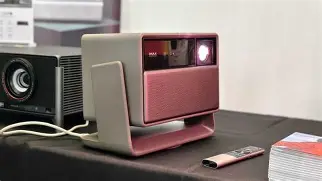
The Xgimi Horizon 20 Max is built on the foundation of accessibility and high-performance optics. Utilizing a Dual Light source—combining LED and Laser technology—it manages to mitigate some of the traditional weaknesses of laser projection, such as "speckle" and color fringing, while maintaining an impressively high lumen count. This makes it one of the most capable projectors for those who do not have a dedicated, pitch-black "bat cave."
One of the standout features of the Horizon 20 Max is its Intelligent Screen Adaptation (ISA) technology. For the buyer who values convenience, this projector is nearly peerless. It can automatically align its image to a screen, avoid obstacles like light switches on the wall, and perform autofocus and keystone correction in seconds. This portability is a key factor. A Horizon 20 Max owner might use the projector in the living room on Friday night and move it to the bedroom or even a covered patio on Saturday. It is a "lifestyle" flagship that doesn't compromise heavily on picture quality.
In terms of performance, the Horizon 20 Max delivers a sharp 4K image with excellent brightness. Its color accuracy out of the box is commendable, and the inclusion of Dolby Vision support—a rarity in the projector world—ensures that HDR content from streaming services looks remarkably close to the director's intent. However, because it is a long-throw projector, it requires a significant distance from the wall to achieve a 120-inch image, and the light path is susceptible to being blocked by anyone walking in front of the lens.
The Hisense L9Q: The True Laser TV Experience
The Hisense L9Q sits in an entirely different category. It is not just a projector; it is a Laser TV. This distinction is critical because the L9Q is designed to replace the primary television in a living room. Using a Triple-Laser (TriChroma) light engine, it dedicates a separate laser to the red, green, and blue primary colors. This allows the L9Q to reach color gamuts that were previously the exclusive domain of commercial cinemas, specifically covering 107% of the BT.2020 color space.
The L9Q is an Ultra Short Throw (UST) device. It sits mere inches away from the wall or screen, projecting upward at a steep angle. This eliminates the "shadow" problem common with long-throw projectors and creates a much more integrated look in a room. To get the most out of the L9Q, it is almost always paired with an Ambient Light Rejecting (ALR) screen. This combination is what allows it to compete with traditional TVs in rooms with windows and overhead lights. The screen reflects the light coming from the projector below while absorbing light coming from the front or above.
Beyond the optics, the L9Q is built with a "tuner-in" philosophy. It feels like a smart TV, featuring high-quality built-in speakers, a robust smart platform, and the snappy responsiveness one expects from a premium display. It is a massive, heavy unit compared to the Xgimi, signifying its role as a permanent installation rather than a portable gadget.
Detailed Comparison: Image Quality and Color Science
When comparing the image quality of these two units, the conversation begins with color. The Xgimi Horizon 20 Max uses a hybrid light source that balances comfort with vibrancy. It produces a very natural image that is easy on the eyes for long viewing sessions. However, the Hisense L9Q is a color beast. The TriChroma engine produces colors that are incredibly saturated and pure. If you are watching a nature documentary or an animated film, the L9Q will provide a level of "pop" that the Xgimi cannot quite reach.
Shop the latest TVs & Home Theater picks on Amazon.
Shop Amazon →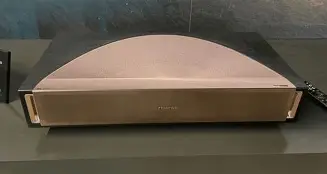
However, pure laser light can sometimes produce "laser speckle"—a slight shimmering effect on white or bright surfaces. While Hisense has done an admirable job of minimizing this on the L9Q, sensitive viewers might still notice it more than they would on the Xgimi’s smoother Dual Light output. Contrast is another battlefield. The L9Q generally wins in perceived contrast when used with its matched ALR screen during the day. In a dark room, both projectors face the inherent limitations of DLP technology regarding absolute black levels, but the L9Q’s brightness helps create a more dynamic range.
Motion handling is excellent on both devices. Both utilize MEMC (Motion Estimation, Motion Compensation) to smooth out fast-acting sports or action sequences. For gamers, the L9Q offers a slightly more "TV-like" gaming experience with dedicated game modes, though neither unit is designed as a competitive gaming monitor. The Xgimi’s Dolby Vision support is a significant feather in its cap, as it allows for better dynamic tone mapping in HDR10+ and Dolby Vision content compared to the more static HDR processing found in many other projectors.
Use Case Analysis: Where Does Each Projector Shine?
Choosing between these two often comes down to the room environment rather than just the spec sheet. The Xgimi Horizon 20 Max is the king of the multipurpose room. If you want the ability to project an 80-inch image for casual viewing and then zoom out to 200 inches for a massive event, the Horizon 20 Max can do that. It is also the better choice for renters who might not want to mount a heavy 100-inch fixed-frame ALR screen to a wall.
The Hisense L9Q is for the homeowner who knows exactly where their theater is going to be. Because it is a UST, the installation is more "set it and forget it." It sits on a media console, and the cables are hidden behind the furniture. For a family living room where people are constantly moving around, the L9Q is far superior because you never have to worry about looking into the lens or casting a shadow on the screen. The L9Q is essentially a 100-inch or 120-inch television that just happens to use a projector as its light source.
Audio is another consideration. The Horizon 20 Max features built-in Harman Kardon speakers that are surprisingly loud and clear for the unit's size, perfect for a portable setup. The L9Q, however, has a much larger chassis and uses that space for a more robust soundbar-style audio system with front-firing speakers. While both benefit from an external surround sound system, the L9Q is better equipped to handle a movie night on its own.
Comparison Table
| Feature | Xgimi Horizon 20 Max | Hisense L9Q |
|---|---|---|
| Projector Type | Long Throw (Dual Light) | Ultra Short Throw (Triple Laser) |
| Resolution | 4K (Pixel Shift) | 4K (Pixel Shift) |
| Color Space | DCI-P3 Support | 107% BT.2020 |
| HDR Formats | Dolby Vision, HDR10, HLG | HDR10, HLG |
| Setup | Automatic (ISA 5.0) | Manual (Requires ALR Screen) |
| Brightness | High (Approx 3100 Lumens) | Very High (Approx 3000 ANSI Lumens) |
| Portability | High | Low (Stationary) |
| Smart Platform | Google TV / Android TV | Smart TV Platform (VIDAA or Google TV) |
Pros and Cons
Xgimi Horizon 20 Max
- Pros:
- Extreme flexibility; can be placed anywhere and sets itself up automatically.
- Dolby Vision support provides superior HDR mapping for premium content.
- Hybrid light source offers a very natural, "non-fatiguing" image quality.
- Compact design makes it easy to store or transport between rooms.
- Excellent price-to-performance ratio for a flagship 4K projector.
- Cons:
- Long-throw design makes the light path prone to obstruction by people.
- Requires a long room to achieve the largest possible screen sizes.
- While bright, it struggles more in daytime environments without a specialized screen.
- Lacks the color saturation "wow factor" of a triple-laser system.
Hisense L9Q
- Pros:
- Stunning color reproduction with the TriChroma laser engine (BT.2020 coverage).
- Ultra short throw design allows it to sit on a standard media console.
- Pairs with ALR screens for a genuine "TV replacement" experience in bright rooms.
- Built-in audio is significantly more powerful and forward-firing.
- Longer lifespan and consistent performance over years of daily use.
- Cons:
- Significant physical footprint; the unit is large and requires a deep console.
- Setup can be finicky, requiring precise alignment with a fixed-frame screen.
- Fixed screen size; if you buy the 100-inch model, you are locked into that size.
- Higher initial investment cost compared to long-throw alternatives.
Buying Guide: Should You Make the Switch?
When deciding whether to upgrade from the Xgimi Horizon 20 Max to the Hisense L9Q, you must evaluate three primary factors: your room’s lighting, your installation requirements, and your color preferences.
1. The Lighting Environment
If your Xgimi currently lives in a room with several windows and you find yourself constantly closing the curtains just to see the screen, the Hisense L9Q is a massive upgrade. The synergy between a high-brightness UST and a sawtooth ALR screen is revolutionary for daytime viewing. While the Horizon 20 Max is bright for its class, it cannot fight physics; light from a long throw is more easily washed out than light hitting an ALR screen from a sharp angle below.
2. The Installation Permanence
Are you someone who enjoys the "magic" of a projector appearing and disappearing? Or do you want a dedicated focal point in your room? The Xgimi is great for those who might project onto a white wall or a roll-up screen. The Hisense L9Q requires a commitment. You will likely need to assemble a large, rigid frame screen and mount it to your wall with precision. If you are not ready for a permanent piece of home theater furniture, the L9Q may feel too cumbersome.
Shop the latest TVs & Home Theater picks on Amazon.
Shop Amazon →3. Visual Sensitivity and Preference
The Xgimi's Dual Light technology is designed to be comfortable. It has almost no "rainbow effect" and the colors feel organic. The Hisense L9Q is built for "peak" performance. The colors are incredibly vivid, which is great for blockbuster movies and gaming but can feel "hyper-real" to some viewers. If you find triple-laser images to be too intense or if you are sensitive to laser speckle, you might actually prefer the more balanced output of the Horizon 20 Max.
4. Content Habits
If you primarily watch high-end 4K Blu-rays or Netflix’s top-tier plan, you are likely consuming a lot of Dolby Vision content. The Xgimi Horizon 20 Max handles this metadata natively, adjusting the brightness and color on a frame-by-frame basis. Most Hisense L9Q units focus on HDR10 and HLG. While the L9Q has more raw color to work with, the Xgimi’s smarter processing can sometimes result in better detail in very dark or very bright scenes within high-contrast movies.
Real-World Buyer Scenarios
Scenario A: The Multi-Room Enthusiast
If you currently use your Horizon 20 Max in your living room but occasionally take it into the backyard for a "movies under the stars" night, upgrading to the L9Q would be a mistake. The L9Q is not meant to be moved. Once it is calibrated to its screen, moving it even a few millimeters will throw the image out of alignment. For this user, the Xgimi remains the superior choice.
Scenario B: The Living Room TV Replacement
If your projector has become your primary way of watching the news, sports, and daytime talk shows, the L9Q is a clear winner. The UST design means you can have the lights on, people can walk past to get snacks without blocking the image, and the overall usability mimics a standard television. The L9Q turns a projector into a functional daily appliance.
Scenario C: The Cinephile on a Budget
If you already have a perfectly dark room and a high-quality long-throw screen, the upgrade to the L9Q might offer diminishing returns. While the colors are better on the Hisense, the Xgimi’s Dolby Vision support and excellent 4K sharpness provide an incredible experience in a dark room. The extra cost of the L9Q and a new UST-specific screen might be better spent on an upgraded surround sound system instead.
Conclusion
The decision to upgrade from the Xgimi Horizon 20 Max to the Hisense L9Q is less about a failure of the Xgimi and more about a shift in lifestyle. The Horizon 20 Max is arguably the most polished and user-friendly long-throw projector on the market today. Its ability to produce a Dolby Vision-certified 4K image with almost zero setup effort makes it a champion of convenience and versatility. If you value the "projector lifestyle"—the ability to have a massive screen wherever and whenever you want it—you are already owning the right device.
However, the Hisense L9Q represents the "pro" version of home projection. By moving the projector to the base of the wall and utilizing a specialized TriChroma laser engine, Hisense has bridged the gap between projection and traditional television. The L9Q offers a tier of color saturation and ambient light performance that the Xgimi cannot match. It demands more of your space and more of your budget, but in return, it provides a consistent, high-impact visual experience that can truly function as the primary screen in a bright, modern home. If you find yourself wanting the projector experience without the projector "hassle"—no shadows, no long cables across the floor, and no need to dim the lights for every show—then the upgrade to the Hisense L9Q is a transformation well worth the investment.