M Series Quantum 2019 Honest Review — Is the Hype Justified?
When I first walked into the electronics department back in mid-2019, I wasn't looking for the most expensive piece of glass on the wall. I was looking for a value proposition. At the time, the buzz surrounding Vizio’s "M-Series Quantum" was reaching a fever pitch in home theater forums and enthusiast circles. People were claiming that for a fraction of the cost of a Samsung QLED or a Sony flagship, you could get a panel that utilized the same quantum dot technology. I’ll admit, I was skeptical. I’ve been burned by "budget wonders" before—those screens that look great in the store under neon lights but reveal horrific blooming and muddy motion the moment you get them into a dim living room.
After nearly five years of living with the 65-inch M-Series Quantum (specifically the M658-G1 variant, which is the "pro" version of that year's lineup), I feel like I’ve moved past the honeymoon phase. I’ve seen it handle everything from high-bitrate 4K Blu-rays of Interstellar to the grainy, compressed feeds of Sunday Night Football. If you are looking at one of these on the secondary market today, or if you’ve followed Vizio’s trajectory since this landmark release, you might still be wondering: was the hype truly justified? Here is my long-term, unfiltered experience as someone who has stared at this specific panel for thousands of hours.
The First Impression: Out of the Box and Onto the Stand
Setting this up in my living room, I noticed right away that Vizio didn't spend the budget on the aesthetics of the chassis. The bezels are thin enough to be modern, but the plastic build feels a bit utilitarian. The feet are wide-set, which meant I had to buy a wider media console than I originally planned. But I didn't buy this for the plastic; I bought it for the "Quantum" moniker. For those who aren't display nerds, Quantum Dots are tiny semiconductor particles that, when hit by light, emit very specific colors. In practice, this means the reds are redder and the greens are greener than a standard LED-LCD.
The first thing I did was turn off "Store Mode" and "Vivid Mode." I’ve always found Vizio’s "Calibrated" and "Calibrated Dark" presets to be surprisingly accurate for a consumer-grade TV. I remember sitting there with my wife, watching a nature documentary on Netflix, and we both noticed the same thing: the color volume. The vibrancy of a tropical bird’s feathers didn't just look bright; it looked deep. There was a richness that my previous mid-range LED simply couldn't replicate. At that moment, I thought I had found the bargain of the century.
Living with the Full-Array Local Dimming
One of the biggest selling points of the 2019 M-Series (the M8 series in particular) was the Full-Array Local Dimming (FALD). Most TVs in this price bracket at the time were edge-lit, meaning the LEDs were along the sides, leading to gray, milky blacks. The M658-G1 boasted 90 local dimming zones. Now, compared to a modern Mini-LED with thousands of zones or an OLED with per-pixel control, 90 might sound like a small number. However, in 2019, having 90 zones at this price point was revolutionary.
In my experience, the local dimming is a double-edged sword. When I’m watching a standard movie scene—say, two people talking in a brightly lit room—the contrast is fantastic. The blacks in the shadows look like actual black, not dark gray. But I noticed a specific disappointment when watching movies with subtitles or during credit sequences. You can see the "blooming"—a halo of light that follows the white text against the black background. It’s a physical limitation of having fewer zones. I found that I had to set the "Active LED Zones" setting to "Medium" rather than "High" to mitigate some of the aggressive pulsing I saw when the TV tried to decide which zones to turn on and off.
The HDR Experience: Brightness vs. Depth
I’ve spent a lot of time testing High Dynamic Range (HDR) content on this set. It supports Dolby Vision, HDR10, and HLG. On paper, it hits around 600 nits of peak brightness. In the world of HDR, where some TVs hit 2,000 nits, 600 sounds modest. But here’s what I found: in a dark room, 600 nits is plenty to make you squint when a flashlight shines on screen. The "Quantum" part of the name really helps here because the HDR highlights don't just look white; they retain their color saturation.
One thing that bothered me over time, though, was the EOTF tracking—basically, how the TV decides to map brightness levels. Sometimes, in very dark scenes, I noticed "black crush," where detail in the shadows just disappeared into a void. I’d be watching a horror movie and realize I couldn't see the texture of a character's black leather jacket; it was just a black blob. To fix this, I found myself constantly tinkering with the "Backlight" and "Brightness" settings, which is something a casual user might find annoying. I shouldn't have to be a hobbyist calibrator just to see what's happening in a basement scene.
Find top-rated TVs & Home Theater products at great prices.
Shop Amazon →Gaming Performance: A 2019 Perspective
I am a fairly consistent gamer, and the M-Series Quantum was my primary gaming screen for the transition from the PS4 Pro to the PS5. Let’s talk about the good and the bad. The input lag is impressively low. When I play shooters like Call of Duty, the "Game Low Latency" mode makes everything feel instantaneous. I never felt like the TV was the reason I missed a shot.
However, the lack of a 120Hz panel is a major drawback that became more apparent as time went on. This is a 60Hz TV. While it can handle 4K at 60fps beautifully, I couldn't take advantage of the high-frame-rate modes on the newer consoles. Also, there is no Variable Refresh Rate (VRR) support. On games where the frame rate dips, I noticed occasional screen tearing or stuttering that wouldn't happen on a more modern, gaming-focused display. If you are a competitive gamer, this was the biggest compromise Vizio made to hit that price point.
The SmartCast Struggle: My Biggest Gripe
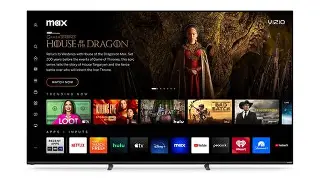
If there is one thing that has consistently tested my patience over the last few years, it’s Vizio’s SmartCast platform. I want to be honest: it’s frustrating. Out of the box, it was slow. After several software updates, it became... slightly less slow. The interface feels "heavy." Navigating between Netflix and Hulu often involves a three-second lag between pressing the button and the screen reacting. In my experience, the built-in apps also tend to crash more than I’d like.
I eventually gave up and plugged in a dedicated 4K streaming stick. It’s a shame because the TV supports AirPlay 2 and Chromecast, which are great features, but the underlying OS just doesn't have the processing power to make them feel fluid. If you’re buying this TV, do yourself a favor and assume you’ll need an external streamer. It saves a lot of headaches.
Long-Term Reliability and Observations
After several years, how has the hardware held up? I’ve noticed a slight bit of "Dirty Screen Effect" (DSE). This is most visible when watching hockey or golf—any scene with a large, uniform color moving across the screen. There are faint, darker vertical bands that I noticed during camera pans. It’s not a dealbreaker, and most people I’ve shown the TV to don't even see it until I point it out, but once you see it, you can't unsee it. It speaks to the panel uniformity issues that plagued Vizio during this era.
On the positive side, the color hasn't faded. It still looks as vibrant as day one. The remote is basic but functional, though it feels like a toy compared to the sleek, metallic remotes you get with high-end sets. The speakers are also surprisingly decent for "thin TV" speakers, though I’ve used a soundbar for 90% of my time with it. If you’re using the internal speakers, expect clear dialogue but zero bass impact.
Comparison: M-Series vs. The Competition
To give you a better idea of where this unit sat in the 2019 landscape, I've put together a comparison based on my research and hands-on time with friends' TVs from that same year.
| Feature | Vizio M-Series Quantum (M658) | Samsung Q60R (Entry QLED) | TCL 6-Series (R625) |
|---|---|---|---|
| Backlight Type | Full-Array Local Dimming | Edge-Lit | Full-Array Local Dimming | Local Dimming Zones | 90 (approx.) | None | 100+ (approx.) |
| Peak Brightness | ~600 nits | ~500 nits | ~800+ nits |
| Smart Platform | SmartCast | Tizen | Roku TV |
| Quantum Dot Color | Yes | Yes | Yes |
Looking at this table, you can see why the M-Series was so hyped. It beat the similarly priced Samsung in backlighting technology and color volume, even if it lost out to the TCL in raw brightness. It occupied a "Goldilocks" zone of performance for users who wanted better-than-average picture quality without the "Samsung Tax."
Discover deals on TVs & Home Theater — updated daily.
Shop Amazon →Pros and Cons
- Pro: Excellent color saturation thanks to the Quantum Dot film. Reds and greens look incredibly lifelike.
- Pro: Deep black levels for its class. The local dimming really helps in making letterbox bars disappear in a dark room.
- Pro: Supports all major HDR formats, including Dolby Vision, which is rare for budget-oriented sets.
- Pro: Low input lag makes it a solid choice for 60fps gaming.
- Con: SmartCast OS is sluggish and prone to "hiccups," requiring frequent restarts or an external device.
- Con: Limited viewing angles. If you aren't sitting directly in front of the screen, the colors wash out quickly.
- Con: 60Hz native refresh rate means it can't handle the 120Hz demands of modern gaming consoles.
- Con: Visible blooming and haloing around bright objects in dark scenes due to the limited number of dimming zones.
Buying Guide: Is It Still Worth It?
If you are looking at a used 2019 M-Series Quantum today, or perhaps wondering if you should upgrade your current one, here is my advice based on my experience. This TV is a "movie lover's budget TV." It is designed for someone who prioritizes color accuracy and contrast over smart features or high-end gaming specs.
Who Should Buy This?
I would recommend this TV to someone who mainly watches movies and TV shows in a controlled lighting environment. If you can find one for a few hundred dollars on the used market, it will likely outperform any brand-new TV you can buy for the same price at a big-box store today. Most modern "budget" TVs are still edge-lit and lack the Quantum Dot layer that makes this 2019 model pop. It’s also a great secondary TV for a bedroom or a kid's playroom where ultra-fast gaming isn't a priority.
Who Should Avoid This?
If your living room has giant windows and you watch a lot of daytime TV, the 600 nits of brightness might struggle against the glare. I personally found that on sunny Saturday mornings, I had to close the blinds to really see what was happening in darker scenes. Also, if you own a PS5 or Xbox Series X and want to see what 120Hz gaming feels like, this TV will be a bottleneck. Finally, if you hate using multiple remotes and want a "all-in-one" smart experience, the frustration of SmartCast will likely drive you crazy.
Conclusion: Is the Hype Justified?
After years of using the M Series Quantum 2019, I can say that the hype was mostly justified, but with a few significant asterisks. At the time of its release, Vizio truly disrupted the market. They proved that you didn't need to spend $1,500 to get a TV with wide color gamut and local dimming. In my experience, it provided 80% of the performance of a flagship TV for about 40% of the price. That is a win in any book.
I was surprised by how much I grew to appreciate the color accuracy over time. I’ve seen newer TVs that look "fake" because the processors over-sharpen everything, but the M-Series feels natural. One thing that still bothers me, even today, is that I never quite feel like the software is "finished." It always feels like it’s one update away from being smooth, but that update has never arrived. I noticed that I stopped resenting the TV once I plugged in a dedicated streaming box; it allowed the panel to just be a panel, and that’s where the M-Series shines.
It’s not a perfect TV. The blooming is there if you look for it, the viewing angles are tight, and the smart platform is a mess. But when I’m sitting on my couch at 9:00 PM with the lights dimmed, watching a 4K HDR film, I don't think about the dimming zones or the smart platform. I just look at the image, and I’m consistently impressed by how much punch this aging panel still has. If you can live with its quirks, the 2019 M-Series Quantum remains a testament to a time when Vizio was swinging for the fences and mostly hitting home runs.